

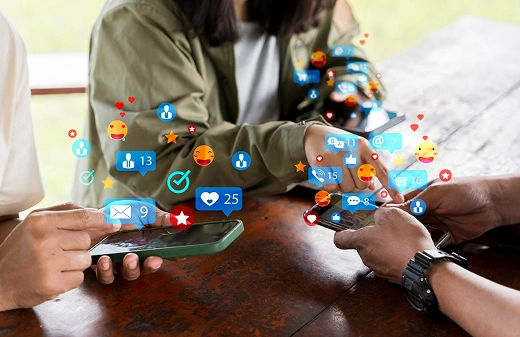
A few years ago, businesses could afford to treat social media as optional — a nice-to-have channel that sat alongside the real work of marketing. That is no longer the case. In 2026, social platforms are where buying decisions get shaped, brand reputations get built or broken, and the gap between businesses that grow and those that stagnate often comes down to how well they use these channels. Social media marketing has moved from a supplementary tactic to a core business function — and the benefits of getting it right go well beyond follower counts and likes.
This post breaks down what those benefits actually are in practical, measurable terms — not as abstract concepts, but as real outcomes that growing businesses are achieving right now. Whether you are starting from scratch or trying to get more out of what you are already doing, understanding what social media marketing can deliver helps you make better decisions about where to focus your time and budget.
How the Social Media Landscape Has Shifted in 2026
The platforms themselves have changed significantly. Short-form video continues to dominate attention across Instagram, TikTok, YouTube Shorts, and LinkedIn. AI-driven content recommendations mean that quality and relevance matter more than ever — platforms are surfacing content to new audiences based on interest signals rather than just follower relationships. Social commerce has matured: users are completing purchases without leaving the app. And the lines between customer service, community management, and marketing have blurred almost entirely.
For businesses, this means the stakes are higher and the opportunity is broader. A well-executed social strategy in 2026 can reach audiences that traditional advertising cannot, build trust at a scale that would have been impossible without multi-million-dollar budgets a decade ago, and generate measurable revenue. But it requires intention. Posting occasionally and hoping for the best is not a strategy — it is background noise.
The Core Benefits of Social Media Marketing for Growing Businesses
1. Brand Visibility That Compounds Over Time
One of the most durable advantages of consistent social media activity is cumulative visibility. Every post, comment, share, and interaction adds to a public record of your brand that people can find at any point. Unlike paid advertising that disappears the moment you stop spending, organic social content continues to work long after it is published. A helpful post from six months ago can still be driving traffic, generating saves, and introducing new people to your business today.
For service businesses in particular, this visibility builds authority over time. When a potential client searches for information about a problem your business solves, finding several well-written posts, genuine customer interactions, and a consistent brand presence across platforms tells a story that no single advertisement can match. You become familiar before the conversation even starts.
2. Direct Access to Your Target Audience
Paid social advertising in 2026 offers a level of audience precision that was unimaginable in earlier marketing channels. You can reach people based on their industry, job title, interests, recent behaviour, location, income bracket, and dozens of other data points. You can retarget people who visited your website, watched a specific video, or engaged with a previous post. You can build lookalike audiences based on your best existing customers.
This precision means your marketing budget works harder. Instead of broadcasting a message to a broad audience and hoping some of it lands, you are putting the right message in front of people who are genuinely likely to need what you offer. For businesses with limited marketing budgets, this targeting capability is often the most financially significant advantage that social media marketing provides.
3. Cost-Effective Lead Generation
Compared to traditional advertising channels, social media offers a substantially lower cost of entry. You can start generating awareness and leads with a modest daily budget, test different messages and creative formats quickly, and scale what works without committing to large upfront costs. The ability to run small experiments, measure results in real time, and adjust based on data means that even businesses with limited marketing resources can compete effectively against larger players.
Organic content adds another layer of cost efficiency. A single well-crafted piece of content can generate engagement, shares, and inbound enquiries at no additional cost beyond the time invested in creating it. For businesses that invest in building a genuine audience over time, the return on that investment continues to grow without proportional increases in spending.
4. Real-Time Engagement With Customers and Prospects
Social media gives businesses a two-way communication channel that no other medium matches. When a customer has a question, a comment, or a concern, they increasingly turn to social platforms rather than email or phone. How a business responds — and how quickly — is visible to everyone who follows or finds that interaction. Done well, this public engagement builds trust with the person you are responding to and with everyone who observes it.
This real-time access also gives businesses a direct line to genuine customer feedback. What are people saying about your products or services? What questions keep coming up? What language do your customers use when describing problems you solve? The answers to these questions, gathered from social listening, are invaluable for sharpening your messaging, improving your offering, and understanding your market better than any focus group could.
5. Measurable Results and Performance Clarity
One of the persistent frustrations with traditional marketing was the difficulty of measuring what was actually working. With social media marketing, that ambiguity largely disappears. Every platform provides detailed analytics on reach, engagement, click-through rates, conversions, and cost per result. You can see exactly which content resonates with which audiences, which paid campaigns are generating returns, and where the drop-offs in your funnel occur. This data-driven clarity makes it possible to improve continuously rather than guessing.
What Each Major Platform Brings to the Table in 2026
Not every platform suits every business, and spreading effort too thinly across all of them is one of the most common mistakes growing businesses make. Understanding what each platform does well helps you focus where the return is likely to be highest for your specific goals and audience:
✓ LinkedIn — the strongest platform for B2B lead generation, thought leadership, and professional brand building. Decision-makers across industries spend meaningful time here, and the organic reach for well-written long-form content remains strong compared to other platforms
✓ Instagram — still dominant for visual brands, lifestyle products, and businesses where aesthetic presentation matters. Reels continue to offer strong organic reach, and the shopping features make it a genuine sales channel for product-based businesses
✓ TikTok — short-form video with the highest organic reach potential of any major platform in 2026. Particularly effective for businesses targeting younger demographics or those willing to show personality and behind-the-scenes content
✓ YouTube — long-form video remains the best channel for in-depth education, product demonstrations, and building deep audience relationships. YouTube Shorts adds a short-form layer that feeds the main channel algorithm
✓ Facebook — organic reach has declined sharply, but Facebook Ads remains one of the most powerful and cost-efficient paid advertising tools available, particularly for local businesses and consumer-facing brands
✓ X (formerly Twitter) — most relevant for real-time commentary, news-adjacent content, and industries where rapid conversation matters. Less effective for direct lead generation but useful for building voice and credibility in specific sectors
Building a Social Media Strategy That Actually Delivers Results
Start With Clear Business Objectives
The businesses that get the most from social media are the ones that start with a clear answer to one question: what do we want this to do for the business? That might be generating a certain number of qualified leads per month. It might be reducing customer acquisition cost. It might be building an audience of potential clients in a specific industry. It might be supporting a sales team by keeping the brand visible to warm prospects during a long buying cycle. Whatever the objective, being specific about it shapes every decision that follows — which platform, which content format, which metrics to track.
Consistency Matters More Than Volume
One of the most common traps in social media is the burst-and-fade pattern — posting heavily for a few weeks, then going quiet when other priorities take over. Algorithms reward consistency. Audiences expect it. A business that posts three times a week, every week, without fail will outperform a business that posts twenty times in one week and then disappears for a month. If your team does not have the capacity to maintain a high posting frequency, choose a lower frequency you can actually sustain and build from there.
Quality of Engagement Outweighs Quantity of Followers
A following of 2,000 people who are genuinely interested in your business and regularly engage with your content is worth far more than 20,000 followers who never interact. Vanity metrics — follower counts, raw impressions, total likes — are easy to chase and easy to inflate, but they do not pay invoices. The metrics that matter are the ones tied to actual business outcomes: leads generated, sales influenced, customer enquiries attributed to social, and cost per conversion on paid campaigns.
What Businesses Most Commonly Get Wrong
After working with businesses across a range of industries, a few patterns come up repeatedly when social media efforts fall short of expectations. Understanding these mistakes makes it easier to avoid them:
→ Treating every platform the same — content that works well on LinkedIn rarely works on TikTok and vice versa. Each platform has its own norms, formats, and audience expectations. Copying and pasting the same post across all channels is a shortcut that usually underperforms on all of them
→ Talking at the audience instead of to them — social media is a conversation, not a broadcast channel. Businesses that only post promotional content and never respond to comments, ask questions, or acknowledge their community tend to see engagement drop steadily over time
→ Ignoring the data — most businesses check their analytics occasionally, but few use that data to make regular, deliberate adjustments to their strategy. Monthly review of what performed well, what did not, and why is one of the highest-value habits a marketing team can build
→ Expecting instant results — organic social media is a long game. Most businesses that abandon their strategy do so in the three-to-six-month window before the compounding effects of consistent effort start to show up in meaningful numbers. Patience and persistence are competitive advantages in a space where most businesses give up too early
→ Not aligning social with the wider business — social media performs best when it is integrated with the rest of your marketing and sales activity. Content themes should reflect current business priorities. Campaigns should support product launches or seasonal moments. Leads from social should flow into a proper follow-up process, not get lost
How iClarity Solutions Group Supports Your Social Media Growth
At iClarity Solutions Group, we work with growing businesses to build social media marketing strategies that are grounded in real business objectives — not just engagement numbers. We help you identify which platforms are worth your investment, build content plans that reflect your brand and speak to your actual audience, and set up the measurement frameworks that let you track what the work is actually doing for your business.
We also work with businesses that have tried social before and found it underwhelming. In most cases, the problem is not the channel — it is the approach. With the right strategy, the right content, and the right consistency, social media can become one of the most productive parts of your marketing mix. We have seen it happen across industries and business sizes, and we know what it takes to get there.
The Bottom Line
The benefits of social media marketing in 2026 are real, but they are not automatic. They come from clear objectives, consistent execution, genuine engagement with your audience, and the discipline to measure and improve over time. Businesses that do this well gain brand visibility that compounds, customer relationships that deepen, and a lead-generation engine that grows without proportional increases in spend. For businesses that are serious about growth, building that engine is not a question of whether — it is a question of how.